Apartment Espresso Setup 101 · Start Here · 2026
Where to Start: A 5-Decision Roadmap
Brand new to apartment espresso? Don't read 12 reviews and 8 YouTube tier lists. Start here. Five decisions, in order. Each one links to a deep-dive guide backed by 877 Reddit threads and 308 Amazon reviews.
The honest summary
- Most apartment buyers research the wrong thing. They compare machines for two weeks. They should be deciding their type (pump vs lever) and budget split (machine vs grinder) first.
- The single biggest variable is the grinder, not the machine. A $400 machine with a $80 grinder is a $400 disappointment. A $250 machine with a $250 grinder is a $500 success. Always.
- Apartment context narrows your shortlist faster than budget does. Counter width, sleeping partner, hard water, and rental status filter most machines out before price even comes up.
- Five decisions cover everything: (1) timeline, (2) machine type, (3) grinder, (4) milk, (5) water. Make them in order. Don't skip ahead.
The five decisions, in order
How long will you keep this machine?
The single most important question, and almost no buyer asks it consciously. The honest answer determines everything downstream.
- Under 2 years (transitional apartment, will move soon): De'Longhi Dedica or Wacaco Picopresso. Treat as disposable. Don't over-invest.
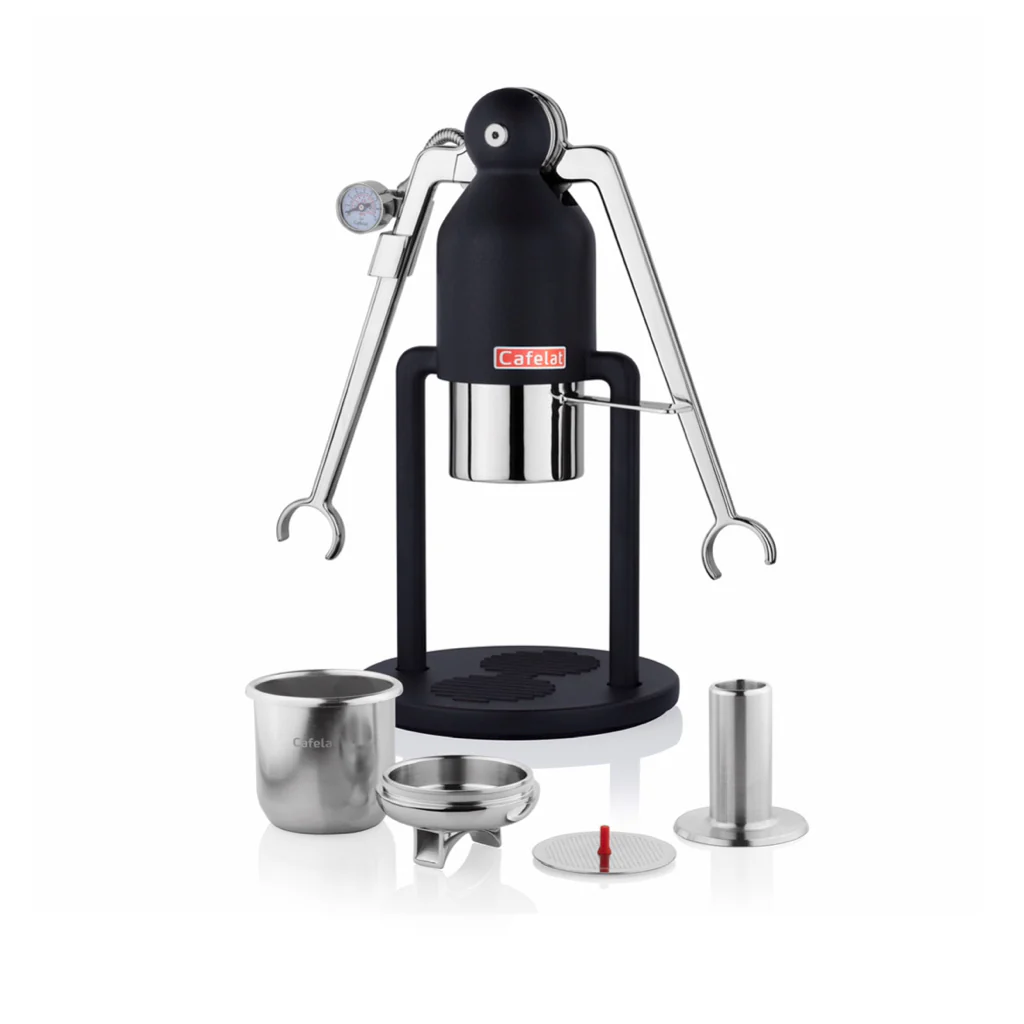
- 2-5 years (current apartment is your base): Breville Bambino base or Plus, or Cafelat Robot. Apartment defaults.
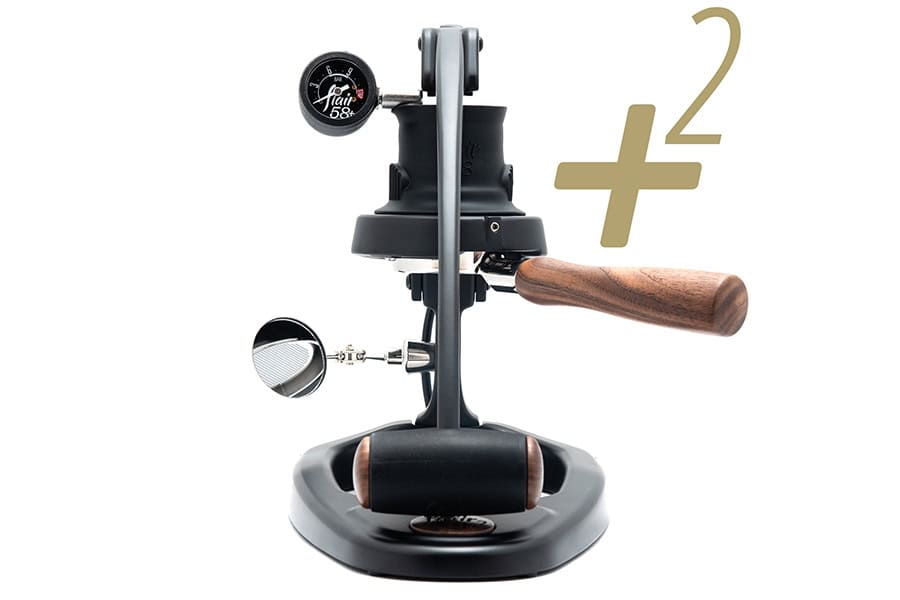
- 5+ years (you're settled, or you'll take it with you): Used pre-2023 Gaggia Classic Pro, Flair 58, or Lelit Anna. Italian-built single-boiler with a lifetime parts ecosystem.
Pump or lever?
Two completely different categories with different lives, prices, and rituals. Most buyers don't realize this is a category choice, not a machine choice.
- Pump espresso (Bambino, Dedica, GCP): Push-button operation. Heat-up in 3 seconds to 8 minutes depending. Vibratory pump means 65-72 dB during a pull. Median lifespan 2-5 years. Best for: speed, milk drinks, household volume.
- Manual lever (Cafelat Robot, Flair 58): Boil water in a kettle, pour into machine, press a lever. Sub-40 dB during pull. Lifetime durability — Cafelat Robot logged 0 catastrophic failures across 101 mentions. Best for: silent operation, renters, ritual buyers.
What grinder?
The decision that separates "this works" from "this doesn't." If you only do one thing right on this entire list, do this one.
- Minimum useful tier ($180-230): 1Zpresso J-Max manual or DF54 electric. Real espresso grinders. Producing consistent 200-350 micron grounds.
- Mid tier ($300-450): Eureka Mignon Specialita or Niche Zero. Better consistency, faster, larger hopper.
- Coffee grinder ($50-100): Don't buy. The Baratza Encore is a great pour-over grinder and a poor espresso grinder. It will bottleneck every machine on this list.
Budget rule: at minimum 50% of your total spend on the grinder. If you have $500 total, that's $250 machine + $250 grinder. Most "the machine sucks" reviews are written by buyers who flipped this ratio.
Read: the 3 unlocks that change everything →Do you make milk drinks?
Milk capability is the easiest decision, and people overthink it. Three buckets:
- Daily milk drinks (latte, cappuccino, flat white): Pump machine with a real steam wand. Bambino Plus is the apartment default for first 12 months; Gaggia Classic Pro is the long-term winner. Lever machines need a separate frother.
- Occasional milk drinks (weekend cappuccinos): Lever machine + Subminimal NanoFoamer Pro ($75). Silent, real microfoam, lasts forever.
- Espresso only, no milk: Any machine works. Lever shines because no built-in steam means simpler, smaller, cheaper, and quieter.
What's your tap water like?
The most-overlooked apartment decision. Hard water in NYC, SF, Boston, DC, Chicago kills espresso quality and accelerates machine death.
- Soft water (sub-100 ppm TDS) — Seattle, Portland, parts of NYC. Tap is fine. Descale every 3-4 months.
- Medium-hard (100-200 ppm) — most US suburbs. Britta-style filter is enough. Descale every 2-3 months.
- Hard or very hard (200+ ppm) — most major US metros. Skip Britta — it's not enough. $50 RO pitcher (ZeroWater, AquaTru) drops TDS below 50. Descale every 6-8 weeks.
If you don't know your TDS, a $15 TDS meter from Amazon settles it. This single $15 purchase prevents 2 weeks of "I can't dial in" frustration that's actually a water problem.
After the five decisions: what to read next
Once you've made these five decisions, your shortlist is usually 2-3 machines. Then you can compare specifically:
What actually breaks (and how to avoid it)
126 buyer-regret signals decoded. The seven failure patterns YouTubers won't mention.
Bambino vs Dedica vs Gaggia Classic Pro
The three most-bought apartment machines, decoded year-by-year.
Manual lever for renters
Why Cafelat Robot and Flair 58 outlast everything else.
The 30-day espresso learning curve
What to expect day 1 to day 30. Includes 6 most common mistakes.
If you only have 5 minutes
Skip to the top-3 ranking on our main pillar: Best Espresso Machine for Small Apartment 2026. The rec at top of page is correct for 80% of apartment buyers. The other 20% have edge-case requirements (sub-$300, sleeping partner silence, 5+ year hold) that one of the four guides above will address.
The apartment-perfect starter setup
For most renters reading this for the first time: Breville Bambino base ($300) + DF54 grinder ($230) + bottomless portafilter ($30) + WDT tool ($10) + 0.1g jewelry scale ($20) = $590. With a Subminimal NanoFoamer Pro for milk drinks ($75), $665 total. This setup will pull excellent shots for 4-5 years on a 60cm apartment counter and survive at least one move. If you can stretch to $890, swap the Bambino for a used pre-2023 Gaggia Classic Pro and you have a 10-year machine.
Related sections
- Reviews — 10 apartment-tested machines, full Reddit/YouTube quote analysis on each.
- Best-of pillars — Top picks by use case (small apartment, sub-$500, quietest, manual lever).
- Comparisons — Six head-to-head breakdowns with side-by-side Apt-Fit diagrams.
- Methodology — How we score and what we measure.